Why WordPress beats Medium for building a personal blog

[Warning: this is quite a technical post. If you don’t plan on running your own blog or have an interest in SEO, you’re probably better off skipping this one! ]

Medium – the good

I love Medium. After using it to find and read great content, I started my own blog there just over two years ago. It’s a great place to find an audience for your content – several of my posts got thousands of reads, and I’m not sure I could’ve got anywhere near that if I’d gone with another platform.

In fact, I’m not sure I would’ve even got started on another platform. The simplicity of Medium’s writing experience – literally as simple as log in and start writing – was what I needed. Everything automatically looked great, and procrastinating by editing themes wasn’t even an option.

But Medium has its issues. I’m not going to do a full comparison of Medium against other platforms as there’s a lot of content that does that out there already, but I’m going to go through the issues I’ve had with the platform and why I’m considering moving my blog elsewhere. You might notice that this is the first post I’ve written on WordPress, and the content is being automatically copied across to my old Medium blog.

The issues I’ll go over apply if you’re trying to find your own space on the web for your writing and as a hub to other projects you’re involved in. They don’t apply if:

  • You want to start a regular writing habit with no goal other than improving your writing (go with Medium)
  • You’re a professional writer and you’re trying to get your content noticed by others with the goal of being featured in publications (go with Medium)
  • Most of your content focuses on writing, and you value a community of other writers to get feedback from (go with Medium – The Writing Cooperative is great for this)

The bad

The issues came when I tried to use my Medium presence to promote other projects I was working on.

After two years of writing on Medium, I had a few successful posts which ranked fairly high in Google for their keywords (e.g. if you search for “workflowy gtd” you’ll find my post on using Workflowy to implement the Getting Things Done framework on the first page).

In other words, my blog was starting to get some credibility with search engines – a rare and valuable commodity on the Web.

What can you do with that commodity? In the field of SEO (Search Engine Optimisation), there are two big benefits you can get from content like that:

  • A boost for the rest of your content on the same domain – e.g. if that page was on harald.co/workflowy, then other pages on harald.co would get a small boost up in their Google rankings for those keywords
  • A boost for content you link to from that page – for example, if I put a link to harald.co/projects on that page, then harald.co/projects would also get a small boost in its Google ranking.

Using these benefits to promote a website is referred to as content marketing. Content marketing is a key tool in SEO, which is all about improving search engine rankings. And these rankings are more important than ever, with the shift to mobile and search engines being the primary portal to the Web. (this study says 51% of traffic is driven by search results, far more than social media or other traffic)

The issue with Medium is that it’s difficult to get either of these benefits. The first one is possible, but it’ll cost you. On top of the price for the domain itself, Medium now charges a $75 fee for linking your posts to your own domain – and even then you don’t have much flexibility in how this is used. (a domain can only be linked to a specific publication, not to your own profile)

The second one isn’t possible at all. To understand why, a short tangent on how search engines work.

How search engines work

At a high level, using Google as an example, search engines use a three step process for analysing content and deciding its ranking:

  1. Google keeps a list of pages it knows about on the Web, alongside associated links and keywords. (this list is called its index)
  2. Google’s bots regularly visit all the pages in the index. They look for links from those pages, and follow the links to find new pages. (this is called crawling)
  3. Google adds new pages it finds to its index, and updates keywords and links for pages it already knew about. (this is called indexing)
  4. When someone performs a search for a specific keyword, Google consults its index to find the most relevant pages for that keyword.

I’ve obviously missed out a lot of detail here! If you’re interested in SEO, Moz has a good beginner’s guide.

Back to Medium: why should it be any different from other sites?

The issue is with how Medium tags links. In the second step, where Google’s bots look for links, there’s a way to tell them to ignore a certain link. You can do this by adding a small bit of code to the link saying “rel=nofollow” – often referred to simply as nofollow – which means that Google won’t follow that link and the page being linked to won’t get the SEO benefit of that link.

Medium tags all its outbound links as nofollow. Why? Probably to avoid people abusing it for their own SEO purposes and flooding it with low value content – useless pages full of links which exists only to boost the pages they link to.

The downside is that, from an SEO perspective, outbound links from Medium posts are basically useless!

Enter WordPress

I initially preferred Medium over WordPress because of the simplicity, and lack of setup required. At this point I think the costs outweigh the benefits, so I’ve set up a new blog on WordPress.com – a hosted version of WordPress, which means you don’t need to worry about writing code or installing anything. It takes a bit longer than setting up a Medium blog and costs £30 per year, but in a few hours you can have a blog set up using your own domain (mine is http://www.harald.co), and have full control over how all your links are tagged.

I  still cross-post everything to Medium, with the required SEO modifications, so I can keep getting the benefits of the Medium readership I’d built up and I can always switch back if I want to. It’s worth pointing out – WordPress.com doesn’t support automatic exporting to Medium like self-hosted WordPress does, but I think that’s a small price to pay for the convenience.

One last note: WordPress isn’t the only platform that allows you to do this, but I think it’s the best choice right now. It’s definitely the most popular, by far, and it’s fairly priced. I looked into Ghost and Svbtle as two good alternatives, but settled on WordPress in the end because of its larger user base and better pricing.

Any thoughts/suggestions? Let me know in the comments or on Twitter!

Bananas, Porridge, and The Importance of Controlled Experiments

This was meant to be a story about how bad bananas are, and how natural isn’t always better. But it’s not. It’s a story about how bananas are probably ok, and control groups are important.

Crash

For a while now, I’ve been getting occasional symptoms of hypoglycemia (low blood sugar). Shakiness, clamminess, irritability, and a fast heartbeat. It’s no big deal, but it’s annoying when it happens in certain situations, like at work.

I noticed that it seemed to happen more often after I ate certain things. I started paying attention to my diet (see this post on a few things I did, like giving up soft drinks) and figured I was probably doing ok. Sugar crashes tend to be caused by overreaction to sharp sugar spikes, and I thought I was doing a pretty good job of avoiding these.

But I was still getting the symptoms.

So maybe I was still doing something wrong?

By the book

There’s only so much you can learn by reading. Despite trawling through tables on glycemic index (and, more to the point, glycemic load) values for all sorts of foods, I was still getting these sugar crashes. Where to go next?

In The Four Hour Body, I read that Tim Ferriss used a continuous glucose monitoring device to keep track of his sugar levels for a while. The one he recommended was ridiculously expensive (£1k+!), but after a bit of research I managed to find a disposable one that would last two weeks for £60.

So I bought one and, with some help, bravely implanted it in my arm. (thanks mum!)

Then for two weeks I kept track of what I ate and how it affected my sugar levels.

Bananas

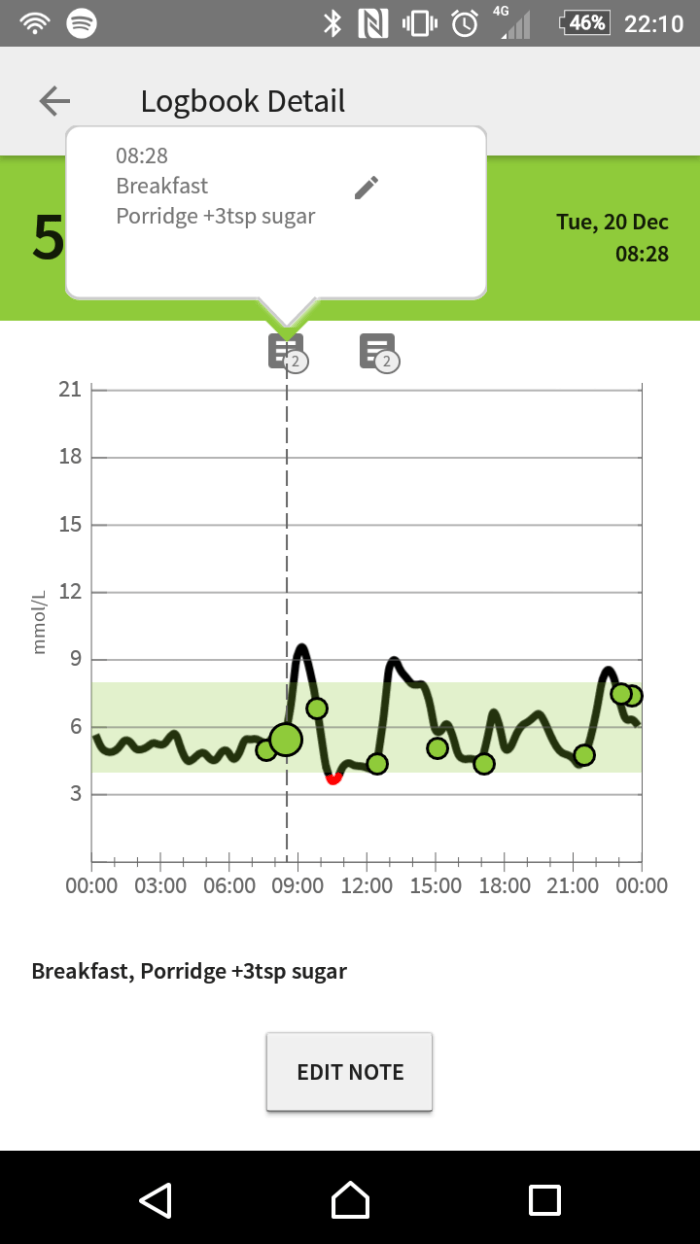
Here’s one thing I noticed: when I had my usual breakfast of porridge oats with banana, my blood sugar shot straight up and crashed down quickly afterwards. (for reference, non-diabetics tend to have blood sugar levels of 4–6mmol/l before meals, and 6-8mmol/l a while after eating)

Now I knew bananas weren’t low in sugar, but I didn’t think they’d have that much of an effect! All this time I’d been having that breakfast because I thought it would give me a good mix of quick and slow release energy to keep me going all morning!

I figured it was time to change my ways. But maybe I could do a few comparisons first.

I measured my blood sugar over a few other meals, and it was stable.

I decided to see how a banana compared to pure sugar. Here’s porridge oats with three teaspoons of sugar:

Almost identical to one banana! Crazy, I might as well have been having sugar with my porridge all this time. Right?

Oops

On the very last day my sensor was active, it occurred to me that I should do one last breakfast experiment: a control group. Just to see — what would happen if I had just porridge? No banana, no sugar, nothing else. Just porridge.

Two things:

  1. It’s disgusting. Seriously, don’t do it.
  2. Surprise! The effect on my blood sugar was the same.

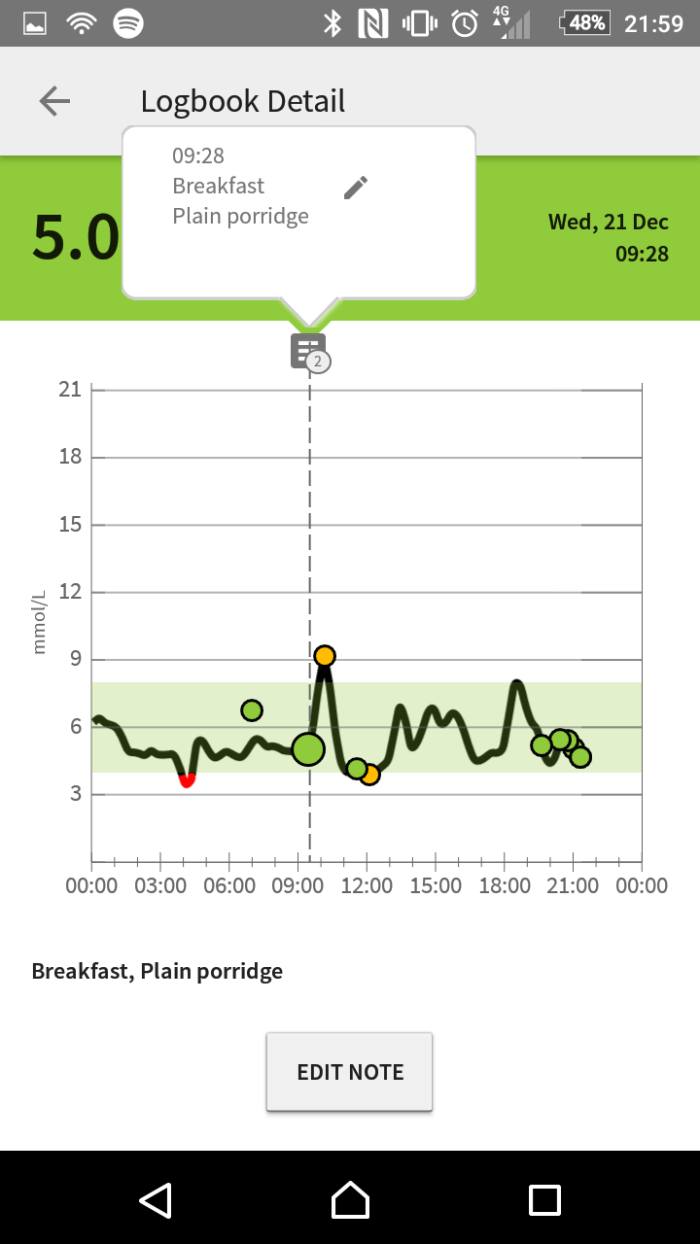
Here’s pure porridge (oats + semi skimmed milk):

Spike, and crash! Like the other two cases. So my conclusions were wrong!

Why?

It turns out that the assumption I’d made at the beginning was wrong*.

I’d been reading too many food and nutrition blogs, and took them at their word when they told me that “oats are a source of slow-release energy”. It turns out they’re not**.

I’d somehow selectively ignored the data that said that oats are, actually, quite high GL. One serving of oats is about halfway between a banana and a can of coke, in terms of its impact on your blood sugar.

What did I learn?

Sometimes you need to trust the way you feel over what you’re reading. Oats definitely won’t be my go-to breakfast anymore.

I also learnt that it’s easy to make conclusions based on very little data. It’s important to conduct experiments designed to disprove your hypothesis, not just to support it!

And finally… if you’re one of the people I spoke to after my first two bowls of porridge, I take back everything I said about bananas! (probably*)


* As someone pointed out to me after reading this, technically I never controlled for the milk in my porridge, which also contains some sugar. My sensor has expired now, but if I had another chance I would do another test with just oats and water. And one where I just eat a banana, to see what that does.

** Someone else pointed out that there might be a difference between different types of oats. As I was eating Tesco’s cheapest oats, it might be worth re-doing this experiment to control for that. 

Snow Monkeys in Japan — Two Perspectives

I was recently in Nagano, Japan. When someone I met there told me about a place called Snow Monkey Park, which has both hot springs and monkeys, I was immediately sold.

I looked up some pictures of this place, and it looked incredible. People bathing in hot springs with monkeys!

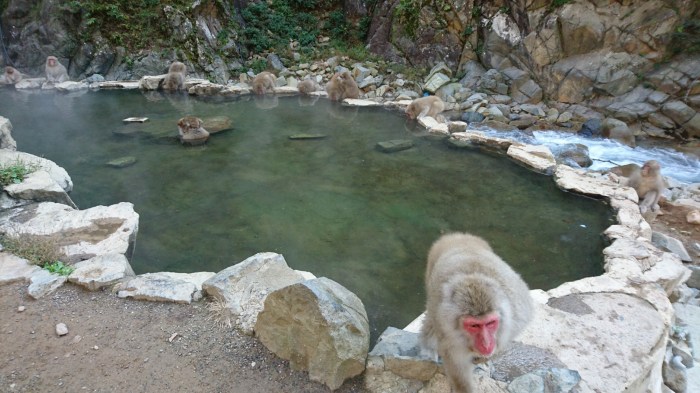
After a short train ride and a bit of a hike I arrived at the park. As promised, it was teeming with incredibly cute wild Japanese macaques, as well as the expected camera-wielding tourists.

While walking around I noticed how I, just like everyone else, spent most of my time there trying to get a good shot of the monkeys.

People didn’t come because they liked it, they came here to take pictures that made it look like the kind of place you’d want to go.

And it looks just like that. But it’s not. The monkeys are wild, but their habitat is far from it. The rock pool filled with hot spring water? That was built especially for the monkeys. In fact, they were building an extension to it while I was there.

Few of the pictures of this place online include the workmen, or any of the pipes transporting water in and out of the pool. Because those don’t make it look like the kind of place you’d want to go.

So everyone who goes there goes to great lengths to get nice shots which don’t feature the workmen or the pipes. These shots then make other people want to go.

When those people get there they secretly feel a bit cheated, but are forced to keep up the illusion because OH MY GOD IS THAT A MONKEY SPA?! So cute!

The Japanese macaque traditionally builds its nest in the slightly warmer areas surrounding generators

It’s not that big a deal, but it’s kind of stupid how we get trapped in this cycle. And it’s a shame, because there’s so much natural beauty in the surrounding area. In fact, I enjoyed the walk to the park a lot more than the park itself.

But somehow an endless stream of people will pay to hang out around other people just so they can take pictures that make it look like they had a great time.

I’m not sure what I’m trying to say here. Something about Instagram maybe, or the unfortunate incentives in a world in which social media takes centre stage, making it more important to look like you’re having a good time than to actually have a good time?

Anyway, Japan is great. And deep-fried snow monkey breast is delicious!

Ok, not really. Well it might be, but I didn’t eat any.

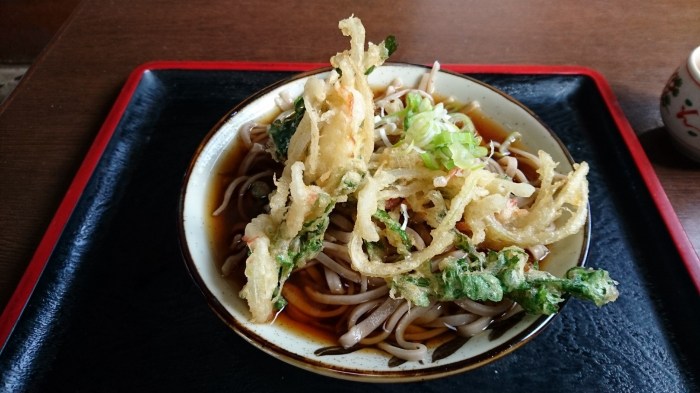
If you do ever go to the snow monkey park, try the noodle place next to the station. The tempura soba is great 🙂

Rockstar Books — Exceptional Non-Fiction

With millions of books published every year, how do you decide what to read next?

In software development there’s a concept called the rockstar programmer. This is the kind of person who operates on a completely different level to most others, and can produce 10x the output of the average programmer. Hiring one of these people can be worth more than hiring ten average people.

I think the same is sometimes true in books. You can read endless good books, or you can seek out the exceptional ones and dedicate your time to those.

This doesn’t apply to all books, but I think it applies to most non-fiction books. While fiction is highly subjective and doesn’t necessarily have one purpose, the main point of non-fiction is usually learning.

I found this out through trial and error. For example, I like reading about psychology and behavioural economics. I really enjoyed the Freakonomics books, and some of Malcolm Gladwell’s writing. They’re easy reads and I came away from those books feeling like I’d learnt something. Though if you were to ask me now, I couldn’t formulate anything I learnt in a way that would be useful to me. (beyond maybe “incentives are important” and “little things can make a big difference”).

And then I read Thinking, Fast and Slow by Daniel Kahneman. It’s much more dense, and takes more time to get into. It requires more focus to read, and the chapters are longer. But it’s completely worth it. Reading this felt like other pop economics/psychology books (like the ones I mentioned above) took one idea from Kahneman’s book and turned it into a chapter, or took a chapter from his book and stretched it into four hundred pages.

Kahneman has spent decades leading research in his field, and so can talk about it in a level of depth that many others can’t. He takes the reader on a journey from hypothesis to experiment design, results, and interpretation. He’s constantly analysing his own way of thinking and shares a wealth of psychological biases that the reader can try to be more conscious of.

The same is true in other fields. Interested in evolution? Try reading Richard Dawkins’ The Selfish Gene. Or go right to the source, and read Darwin’s Origin of Species. You might be surprised by how relevant most of the content still is, and the clarity with which the ideas are presented. Physics? Try the Feynman lectures.

Some people are primarily writers, and their job is to sell as many books as they can. They find interesting ideas, and write them up in a way that makes people want to buy their books. There’s nothing wrong with this, but I think they rarely compare to the people whose writing is secondary to their real work.

This is where the 10x books come from — people who have invested huge amounts of time mastering a field, and who also happen to have a talent for explaining things.

These people don’t write about things because they’re new or fashionable. They probably don’t have enough material to bring out a new book every few years. But their material is far more valuable, and more timeless.

Timelessness is key. An easy way for an author to increase book sales is to cater excessively to the readers of the time, compensating for quality of content through ephemeral relevance. An extreme example of this is the news — while reading today’s news feels somehow educational, reading a newspaper from more than a few days ago is extremely dull.

You can use this as a heuristic to evaluate non-fiction books. If you’re looking for a book on a specific subject, see if there are any which are more than a few decades old and are still considered relevant. When judging a recent book, consider how useful you would expect it to be in a few decades. Hopefully this can help you find those exceptional 10x books, and avoid the ten others.


Thanks for reading! For some more book recommendations (fiction and non-fiction), check out this post 🙂

Two Weeks In Italy

A Brief Broneymoon

After a long drive, we arrived at Bassetto hostel late at night to find a room full of people and at least as many bottles emptied of wine.

It was the kind of place where everyone had a story. Something they were running away from, trying to hold on to, or trying to find.

As we talked to the others, we got to know their stories. It was like an episode of Lost, except the characters were real and the stories were well written.

We all shared travel experiences. One of the girls, Kristin, spoke about a beautiful B&B in a different part of Italy where she’d stayed with a welcoming family. The father, Enrico, was a great guy. His girlfriend had studied astrophysics, and recently spent a day meticulously placing hundreds of tiny fluorescent stickers on the bedroom ceilings in the places where the stars would be. Staying there was magical, like sleeping outdoors.

The others’ stories were even more interesting. A newly qualified doctor with an endless collection of completely implausible anecdotes. A super social ex-heroin addict. A guy who got divorced, sold his house and all his possessions, and was travelling until his money ran out. These were the people we’d be spending the next few days with, at Bassetto hostel.


Bassetto is a regal complex reminiscent of a castle, enveloped by huge grounds. The kind of place where, when it gets dark, you go ghost hunting. After it was built in the 13th century, it was inhabited by monks for hundreds of years, the cellars producing vast quantities of wine. Increased competition and the introduction of an official wine classification in the mid 1900s put an end to Bassetto’s wine business, and it fell into disuse.

After a short stint as a tobacco farm, the upper floors were converted into a guesthouse. The cellars remained empty. Mostly.

Midnight exploration of the underground caverns yielded some bottles of wine which were hundreds of years old.

As we went deeper into the cellars, the air got thicker and the room around our torch got darker. We pulled aside a curtain and entered a narrow tunnel. Suddenly someone was running.

“Did you feel that? This isn’t right. We have to leave!”

We ran through the tunnel, past the curtain, and into the open air. After we caught our breaths and recovered in the hammocks outside, we went up to the guesthouse and tried to get some sleep.


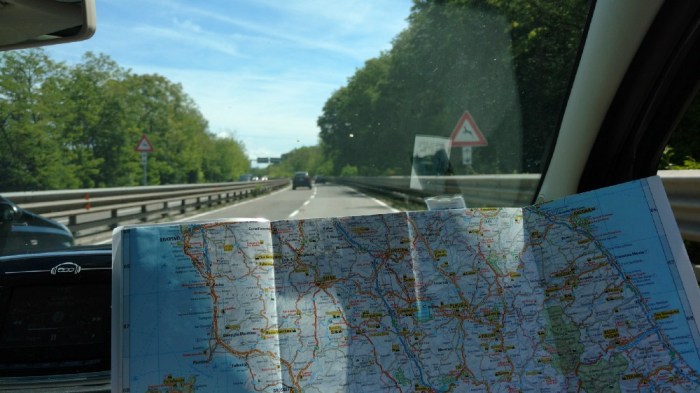
We left Bassetto, but it never really left us. We had gelato in Orvieto, rented a boat in Amalfi, explored ruins in Pompei, hiked up a mountain in Abruzzo, got sick on seafood in Rimini, and added another country to our list by having lunch in San Marino.

A few weeks and a thousand miles later we arrived in Modena for what were to be the last two nights of our trip. On our second day there we had lunch with the owner of the B&B and his family.

As we were eating, the owner’s girlfriend, the mother of one of the children, asked us if we’d noticed anything strange in our room the night before.

“No…”

“Nothing? ”

“…”

“What about after you turned out the light?”

“Erm. No? Wait… What did you say you studied?”

“Astrophysics.”

Thanks for a great few days, Enrico and Antonella.

Sleep under the stars: Selvatica 50 B&B, Nonantola.

Sleep, if you can: Fattoria Bassetto

Getting the Most out of Facebook

And Letting It Get Less out of You

Facebook is incredible. Even just 10 years ago it would have been hard to think that there would be one go-to online identity service.

That instead of giving someone your number when you meet them, just exchanging names could be enough to stay in touch with them for years.

That you don’t lose touch with people when they move. That you could keep up with the lives of people living anywhere in the world. That you could share pictures with all your friends at the click of a button.

But all these benefits come at a cost. Since Facebook is a for-profit company and not a public service, their main goal is to make money. While that’s not necessarily a bad thing, it’s worth keeping in mind how it affects Facebook’s interaction with us, its users.

“If you’re not paying then you’re not the customer; you are the product being sold”

Setting aside issues of privacy and Facebook gathering and selling your information, Facebook makes money by literally charging advertisers for a piece of your attention. One of the main ways in which it does this is through the News Feed.

There are entire teams dedicated to optimising the News Feed to keep you scrolling. The more you scroll, the more adverts you see. The more adverts you see, the more money Facebook makes.

I recently read the book Deep Work by Cal Newport, in which he advocates deliberate use of social media. In fact, he goes so far as to recommend quitting social media altogether. While I think that’s overkill, his book led me to re-examine how I used Facebook and to come up with a few easy ways to get the most out of it.


Making Facebook your own

Keep what you like, get rid of the rest

By changing the way you access Facebook, you can make it what you want it to be.

Thinking about how I use Facebook, these are the things I value:

  • One platform to message any of my friends
  • Being invited to events and inviting others to events
  • Seeing significant updates for certain close friends

These are the things I catch myself doing which I want to avoid:

  • Mindlessly opening Facebook on my phone and scrolling through the News Feed any time I go a second without stimulation
  • Seeing just the good bits of other people’s lives and wondering why I’m not on holiday, why I’m not running a marathon, or why I’m not moving in to a new house
  • “Oh wow! That girl I met in Thailand in 2012 just dyed her hair! ”

To serve Facebook’s advertising goals, the above are addictive by design and so the best way to avoid them is probably to avoid the News Feed altogether.

It turns out that this isn’t too hard to do. I’m using a combination of tools I found through recommendations from friends (thanks Ed Moyse!), Google, and Quora:

Facebook Messenger

A dedicated app, only for messaging (iOS/Android). No distractions. For a desktop version, go to Messenger.com.

Kill News Feed for Chrome

This extension gives you Facebook, minus the News Feed. Once installed, you can go to facebook.com and do absolutely anything you like — look up friends, message people, check your notifications, sign up to events. Except for scrolling through the News Feed.

Facebook.com/notifications

Bookmark this on your phone. This shows just your notifications, for those times when you’re thinking “I wonder if anything has happened that I should know about” but don’t want to get dragged into anything irrelevant. I use this, together with Messenger, instead of the Facebook app on my phone.


While this might not work for everyone, I’ve found it to be really useful so far. However you feel about this exact solution, you might like to think about what‘s right for you rather than leaving it up to Facebook to decide. And if you come to any interesting conclusions, I’d love to hear about them!


Thanks for reading! If you love the News Feed and this all seems a bit odd to you, you might like this article on a few not-so-well-known ways to customise the News Feed.

If you liked what you read here, I’d highly recommend reading Cal Newport’s book, Deep Work.

Buy now on Amazon: UK|US.

Compare prices: UK|US.

On Weekly Reviews

As I talked about in my post on annual reviews, I use a weekly diary-type process to keep track of how everything is going.

My process is simple: I have a spreadsheet in Google Docs which has a number of rows containing questions, and every week I add a new column with the answers to those for that week. I usually set aside around half an hour to do this, though depending on what the week has been like for me it could take more or less time than that.

The exact questions will depend on what’s important to you and what you want to track. A few of my key ones are:

  • What went well this week?
  • What went badly this week?
  • Who did you enjoy spending time with?
  • Who did you not enjoy spending time with?
  • What’s your mood like right now?
  • What happened this week?

In the first two I usually put down things like work, personal relationships, sleep, exercise, nutrition, motivation, and progress on projects outside of work.

Three and four force me to be honest about the people I spend time with, and allow me be more aware of whose company I enjoy consistently and who I should be spending more or less time with.

The last two are great when looked at across an entire year. While the mood question tends to have a one word answer, the other one I treat like a free-text area where I just write down in a few lines all the things I can remember happening, in no particular order. This part is more like a traditional diary, and gives some insight into what I was thinking about/doing each week.

I think everyone should take the time to answer the above six questions on a weekly basis. This system not only provides them with greater insight into themselves, but is also a useful tool looking back across a period of several months.

In addition to the above, I’ve also integrated a few extra things into my weekly review process:

  • External data sources — RescueTime measures how I spend my time on my phone and computer, and sometimes faces me with the grim reality that I spent 5+ hours on WhatsApp in a single week. Beeminder keeps track of my more short-term personal goals and habit commitments.
  • GTD cleanup — clearing my In list and reviewing my Next Actions list to ensure that everything there is still relevant. More details here.
  • Meta goals — spending 30 seconds thinking about how I can improve my weekly review, and another 30 seconds checking my calendar and finding a convenient time to do it next week.

The last point is crucial to keeping up this or any other habit, and is something I will elaborate on in a future post.

Having done this mini review every week for a year now (except one where I was on a two week road-trip holiday and completely forgot) I feel like it’s added a lot to my life and I expect it to evolve more as I keep doing it. I’d like to thank Cal Newport for giving me the idea to do this.


Enjoyed this article? Please share/recommend/follow 🙂

On Annual Reviews

Reviewing One Year; Planning The Next

There is one ingredient (other than coffee) that is key to a successful annual review — and that’s acknowledging that a year is a long time. Our minds aren’t built to compare events across such long time frames, and a severe subconscious distortion takes place when you try to think about everything that happened in an entire year. The solution to this is to make reviewing your life not just something you do on a yearly basis, but an ongoing process.

Looking Backward

Weekly Reviews and The Availability Heuristic

The Availability Heuristic is a cognitive bias that was introduced to me in the book Thinking, Fast and Slow. It’s the phenomenon which causes people to make judgements about the probability and significance of events by how easy it is to think of examples.

In practice, it means that more recent events are far easier to remember than distant events, and so we see them as more significant and more frequent. So when we do an annual review without prior planning, we often end up reviewing the end of the year rather than the year as a whole.

To avoid this bias, and to try to separate recency from importance or intensity, it helps to review the year’s events as if they just happened.

The way I’ve started doing that is to keep a kind of log, a very compact diary, on a weekly basis. I’ve been doing this for a year now and I feel like it’s really helped me keep things in perspective. Reading through this I’ll often be surprised at how significant things which happened a long time ago seemed at the time. I’ve written about my weekly review process in more detail here.

Looking Forward

Use Systems, Not Goals

Gym attendance statistics are one piece of evidence to suggest that New Year’s resolutions don’t tend to work — the general defeatist attitude towards them is another.

Goals like “exercise more”, “eat less”, “learn to speak French” and “lose 5kg” are almost impossible to realise by themselves. Scott Adams has written and talked about this quite a bit. Describing a system as a way to “continually look for better options”, he writes:

Throughout my career I’ve had my antennae up, looking for examples of people who use systems as opposed to goals. In most cases, as far as I can tell, the people who use systems do better. The systems-driven people have found a way to look at the familiar in new and more useful ways.

To put it bluntly, goals are for losers. That’s literally true most of the time. For example, if your goal is to lose 10 pounds, you will spend every moment until you reach the goal — if you reach it at all — feeling as if you were short of your goal. In other words, goal-oriented people exist in a state of nearly continuous failure that they hope will be temporary.

To combat this, I use a combination of vague guidelines and rigid systems. Guidelines are idealistic rules which give guidance in decision making, whereas systems are there to implement these rules in a realistic and sustainable way.

A guideline might be something like Michael Pollan’s “Eat food. Not too much. Mostly plants.” The associated system could be a combination of Beeminder goals to eat less meat and less sugar.

Another set of guidelines could be: “Spend more time with people who help you grow. Spend less time with people you’re indifferent about, and people who hold you back.” This could be implemented as a system by forcing yourself to think consciously on a weekly basis about who you enjoyed spending time with, and who you didn’t.

This year was the first time I implemented these new tools, spending a morning in the local library with a lot of coffee, a notebook and a laptop. I got a lot of clarity out of those few hours, and it got me excited about the year coming up. If you’d like to try this out you might find my other post about weekly reviews helpful.


Enjoyed this article? Please share/recommend/follow 🙂

For more on cognitive biases, check out the book Thinking, Fast and Slow. Buy it now on Amazon (UK/US) or compare prices across multiple stores (UK/US).

Accuracy Over Precision

At school I had a physics teacher who was extremely pedantic. Nothing would upset him more than if you used the wrong term to refer to something. Even small mistakes most people wouldn’t pick up on would incense him.

I didn’t really get why, and in fact we would take great pleasure in saying the wrong thing so we could watch his face turn red as he shouted “Gravity is not a force! It’s an ACCELERATION!

But one of the distinctions he made has stuck with me. One that has turned out to be useful in many things in life, and not just physics. And that’s the distinction between accuracy and precision. While some people use these almost interchangeably, they have very different technical definitions.

Both apply to problems of measurement. In measuring things, we rarely have perfect tools, and most measurements will have some degree of error in them. Accuracy and precision are words we use to talk about different aspects of those degrees of error.


Accuracy vs Precision

Accuracy is how close our measurement is to the real value we’re trying to measure.

Precision is about the level of detail in our measurement.

It’s not immediately clear why these are different concepts, because in many cases they have the same magnitude. For example, measuring length with a ruler will let you read off an answer to the nearest 1mm (precision), which will probably be within 1mm of the real length (accuracy).

But this isn’t always the case. A watch might show the time to the nearest second (precision), but if you haven’t set it properly it could be out by a few minutes (accuracy).

It gets worse. When we start dealing with estimates and predictions in the presence of noise, these numbers can be much further off.

Estimation

For example, this article in the Telegraph claims that socialising increases our happiness by 6.38%. Yes, it might be true for the set of data points collected on the sample of people surveyed. But the decimal places hardly seem relevant, as the ‘real value’ (if there even is such a thing in this case) probably can’t be measured that accurately in a single study.

What’s happening in the Telegraph article, and in other places, is that by giving results to a high degree of precision, they create the illusion of accuracy and confidence in the results.

It’s not particularly damaging here, as there probably aren’t many people basing their actions on the results of that article. But what about more significant areas?

There’s nothing wrong with predictions or estimates, but giving precise estimates and not stating the variance or the level of confidence can be misleading.

Application

If you’re making a decision based on data, don’t mistake precision for accuracy. If in doubt, ask questions:

  • How many measurements were used to come up with the number you’ve been presented with?
  • What is the range in the sample of measurements? What was the smallest value, and what was the largest value?
  • How close does the person presenting the data think it is to the real value?

The last question will force them to be open about the accuracy of their data, and should allow you to decide how much weight to place on it. Sometimes it can even be best to just ignore the number completely and focus on more important things for your decision!


Thanks for reading! If you’ve found this article useful I’d really appreciate it if you could share or recommend it so other people can find it too. Follow me for more of the same, or check out some of my other articles.

Influence by Robert Cialdini

A Summary

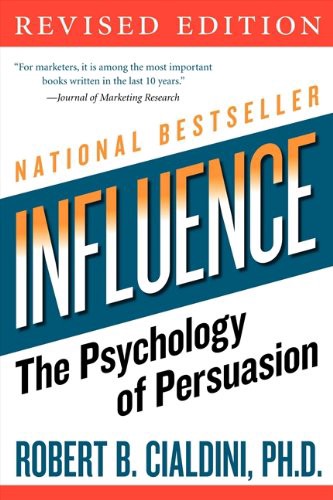
I just finished reading Influence: The Psychology of Persuasion, and found it fascinating. It’s like an applied version of Thinking, Fast and Slow, with lots of examples on how cognitive biases are exploited and how you can protect yourself against each of them.

I picked it up because it’s recommended by Derek Sivers as one of the top books on sales and marketing. There’s some great content in there, and as I found myself sharing my notes with a few friends I decided to put them up here for everyone to read. I don’t think the below summary is a replacement for reading the book, but it should give you a good idea of what the main ideas are and whether it’s the kind of book you’d like to read.

Derek Sivers also has his own notes on the book here. I’d highly recommend buying and reading the full book though, for £6/$8 it’s a great investment!

Buy now on Amazon: UK | US

Compare prices: UK | US


Weapons of Influence

Some animal behaviours are completely governed by reactions to simple triggers. E.g. mother turkeys will care for anything that cheeps, but won’t care for a baby turkey that doesn’t. This can also apply to humans.

Humans develop “shortcuts” by receiving repeated feedback on similar decisions. Kind of like going from System 2 (slow) to System 1 (fast).

The contrast principle. When two different things are shown one after the other, the differentiating characteristics of the second will appear exaggerated. So if you’re selling a suit and a jumper to the same person, sell the suit first. Then the jumper will appear cheaper. This is related to the concept of anchoring.

Reciprocation

Human societies have developed an evolutionary urge to reciprocate. This means that by giving someone a gift/doing them a favour, you can generate goodwill and potentially a return gesture. This can work regardless of whether the initial gesture was invited or not, and even if it was unwanted.

The reciprocation rule also applies to concessions — so if you ask someone for a big favour and they say no and you concede by asking them for a smaller favour, they are then likely to concede and say yes to that smaller favour.

Arrangements agreed with perceived concession generate increased feelings of responsibility (the opponent feels that he influenced the negotiation) for and satisfaction with the outcome.

The key to resisting these tactics, if used on you, is to recognise them for what they are. There’s no need to refuse all favours, but if you recognise a favour as a sales tactic then respond to it not as a favour, but as a sales tactic. There’s no need to reciprocate to a sales tactic.

Commitment and Consistency

The drive to be (and look) consistent is a highly potent weapon of social influence, often causing us to act in ways that are clearly contrary to our own best interests.

One way toy stores use this: run ads for amazing toys before Christmas. Undersupply stores with those toys so parents have to buy substitutes. After Christmas, increase supply again so parents who promised their kids they’d buy those toys and want to remain consistent end up buying Christmas toys twice.

Commitments are most effective in changing a person’s self-image and future behaviour when they are active, public, and effortful. But even more importantly, the person must think they have chosen to commit in the absence of strong outside pressures.

This suggests that we should never heavily bribe or threaten children to do the things we want them truly to believe in. If we want them to believe in the correctness of what they have done, then we must somehow arrange for them to accept inner responsibility for the actions we want them to take.

Lowballing: an advantage is offered that induces a favoured behaviour or decision. The subject justifies this decision to themselves by changing their views to fit the decision. Then the advantage is taken away, and the behaviour/decision is fully supported by the subject’s new views.

Two ways to fight back against opponents attempting to use your need for consistency against your best interests:
1. If you get that weird feeling in your stomach and realise what is happening, call them out on it. Say that you don’t want to continue purely for the sake of consistency.
2. If you’re not sure what you really believe, ask yourself and pay special attention to your immediate instinctive/emotional response. You can lie to yourself and rationalise things when thinking intellectually, but not as easily in these basic responses.

Social Proof

People use others’ opinion as another shortcut to figuring out the truth. This sometimes even works when something mimics others’ opinion even though we know it’s fake — e.g. laughter tracks make things seem funnier.

The pluralistic ignorance effect or bystander effect happens under uncertainty, when the social cues that everything is fine overcome the concern that there might be an emergency.

In an emergency, ask for help clearly. Direct your request at one person at a time. Your best strategy when in need of emergency help is to reduce the uncertainties of those around you concerning your condition and their responsibilities.

1978 Jonestown, Guyana. Jim Jones, leader of The People’s Temple, instructs his followers to commit mass suicide. 910 people did so. This was after, a year earlier, the entire community moved from San Francisco to the jungle in Guyana.

Surrounded by uncertainty, people look to the actions of others to guide their own actions.

Be wary of situations where social feedback is faked (laughter tracks, ads,…) and consciously disengage your social autopilot and examine the evidence independently. Look up and around periodically whenever locked onto the evidence of the crowd.

Liking

People are more likely to buy from or follow others they know or like, as exploited by Tupperware parties. Separately, the halo effect induces us to imbue attractive others with unrelated positive attributes by assumption.

Physical attractiveness, similarity, compliments, contact and cooperation (familiarity), conditioning and association can all influence how much we like someone.

Kids away at camp. To increase hostility, separate them physically in different areas and give the separate groups names. Then put them in competition with one another. To increase harmony, construct situations where they have to cooperate, and where competition would be harmful to both sides.

Shakespeare: “The nature of bad news infects the teller.” A lot of strange behaviour can be explained by the fact that people understand the association principle well enough to strive to link themselves to positive events and separate themselves from negative events — even when they have not caused the events.

When talking about wins, sports fans often use “we” to associate themselves with success. When talking about losses they’ll often use “they” to distance themselves — even though it’s clear that that there is no causation in either case. People with a weakened self-image will feel a stronger need to do this.

Countering the liking strategy: it is too difficult to prevent ourselves from liking someone, but we must be aware of it when making decisions. In making a compliance decision, it is always a good idea to keep separate our feelings about the requester and the request.

Authority

Milgram experiment, 1965. ‘Teacher’ subjects continued to administer increasingly painful shocks under instruction of the researcher, even when the subject was clearly in agony and begged for them to stop.

Obedience to authority is another mental shortcut we use because in general it pays off — authority figures (teachers when we’re kids, doctors/lawyers/professionals when we’re adults) often have more information than we do. But this reflex can be abused by others taking advantage of their authority status or masquerading with fake status.

Again the pretence works as well as the real thing — even actors playing doctors are seen as having authority.

Titles, clothes, trappings — not only do these have great effect on our actions, we consistently underestimate the effect they have on our actions.

Countering abuse of authority — ask two questions:
Is this authority truly an expert?
How truthful can we expect the expert to be here?

Take care — sometimes the expert might make small concessions to appear more truthful. Seeming to argue against their own financial interests can sometimes serve those interests well, by establishing them as credible, helpful authority figures.

Scarcity

When customers show casual interest in an item on sale, a salesperson might pretend he thinks it has sold out — but that he could check the store room if they would be interested in buying it if it’s available. The apparent scarcity increases the perceived value of the item, and triggers a commitment that can then be used to the salesperson’s advantage when they return with the item and a sale contract to sign.

Related to the above limited-number technique is the deadline tactic. An offer is listed with an expiration date, triggering increased interest.

Primarily, our penchant for scarcity is again a shortcut based on the (generally correct) assumption that scarce items are more valuable.

A second explanation is that of psychological reactance: as opportunities become less available, we lose freedoms; and we hate to lose freedoms we already have. According to this theory, whenever choice is limited or threatened, the need to retain our freedoms makes us desire them (as well as the goods and services associated with them) significantly more than previously.

The power of psychological reactance is most clearly manifested in two age groups: twos and teens.

Under conditions of scarcity (e.g. an item being made illegal) we imbue the scarce item with more positive attributes than we otherwise would.

Often banning or censoring information can make that information appear more valuable or truthful.

When is scarcity most effective as a weapon of influence?

Newly experienced scarcity is more powerful than constant scarcity. Scarcity can be manifested as a lack of rights, and groups who have rights taken away become much more incensed than those who never had them in the first place. Children who lose established privileges are much harder to control than those lacking never-posessed ones.

Even more powerful is scarcity that is generated by demand. This is seen in black Friday sales, and with a lover becoming more keen with the appearance of a rival. It can also be seen in open-bid auctions, where participants and up bidding much more than they intended to. In a way, the winner of these auctions is often the loser.

Countering scarcity: as soon as we feel the tide of emotional arousal that flows from scarcity influences, we should use that rise in arousal as a signal to stop short. We need to calm ourselves and gain a radical perspective.

Once that is done we can calm ourselves why we want the item under consideration. If it is primarily for the purpose of owning it (as a rare commodity) then we should use its availability to help gauge how much we want to spend on it. However, if it is something we want primarily for its function, then we must remember that the item under consideration will function equally well whether scarce or plentiful. Quite simply, we need to recall that the scarce cookies didn’t taste any better.

Epilogue

All these weapons of influence can be used for good or bad ends. They are based on shortcuts we use which, when the evidence they use is legitimate, serve us well. Practitioners who use these ‘weapons’ ethically serve our best interests and allow us to make effective decisions quickly.

Practitioners who fabricate or distort evidence, or construct scenarios which affect our decision making do not serve our best interests and should be treated with caution.

Buy now on Amazon: UK | US

Compare prices: UK | US


Thanks for reading! If you’ve found this summary helpful, I’d really appreciate it if you could share or recommend it. Check out my other articles on keeping reading cheap and top gift book recommendations.