16 Books That Make for Perfect Gifts

All of your holiday shopping, done in 32 clicks?

If you’re like me, you’re a bit conflicted when it comes to Christmas gifts. While it’s fun to buy people things they like, it’s not always easy to know what those things are. A lot of gifts end up getting thrown out, are never used, or are worn begrudgingly.

Wow, thanks nan! Those are exactly the kind of thick grey woolly socks all the cool kids at school are wearing…

If so, you might be interested in something I’m trying this Christmas: when you find yourself struggling to come up with a meaningful gift idea, consider giving a carefully chosen book. If possible, a used book. Because words don’t go off once they’ve been read, and books don’t run out of batteries.

If the book is good enough, the recipient will be so hooked after one chapter that they might even forget to feel bad about that novelty mug they got you.

Used is the new new.

Which book? Easy. I take it you’ve probably got a friend who spends most of their free time in the gym? Maybe another friend you rarely see because they’re always working? A friend who watches repeats of cooking shows, but is ‘too busy’ to actually cook? A crazy friend with an endless stream of mad ideas?

For each of these friends, I’ve picked out a book they’ll love. Some of the books are bestsellers, others are more niche. Most of these I’ve given as gifts or will be giving this year.


The Fitness Freak

Born to Run — Christopher McDougall
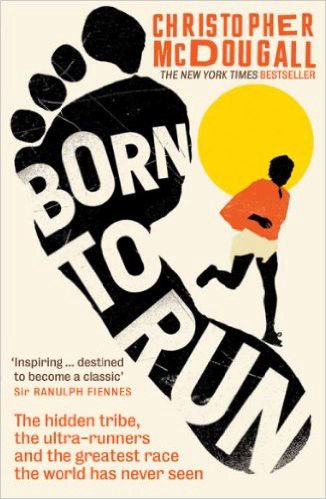
Did you know that primitive humans used to hunt prey not by outsmarting them, but by outrunning them? The only reason they’ll want to stop reading this book is to put their trainers on (or not!) and go running.

Buy now on Amazon: UK | US

Compare prices: UK | US


The Anarchist

The Dice Man — Luke Rhinehart
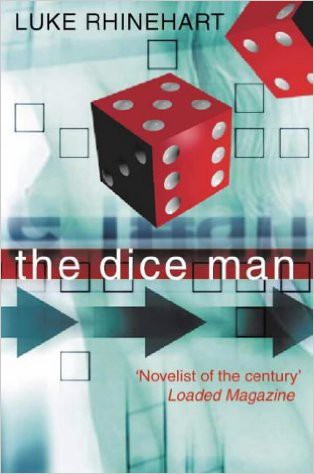
Psychologist Luke Rhinehart decides to let randomness rule his life, and hands over control to the dice. This book will test the limits of even the strangest minds.

Buy now on Amazon: UK | US

Compare prices: UK | US


The Romantic

The Rosie Project — Graeme Simsion
A look into the mind of adorable autistic academic Don Tillman as he employs questionnaires in his search for a girlfriend. If it’s good enough for Bill Gates’ friends, it should be good enough for yours.

Buy now on Amazon: UK | US

Compare prices: UK | US


The Traveller

Vagabonding — Rolf Potts

The ultimate guide to long-term travel. If they’ve been thinking about taking some time out to explore, this will help them do it.

“Vagabonding involves taking an extended time-out from your normal life — six weeks, four months, two years — to travel the world on your own terms.”

Buy now on Amazon: UK | US

Compare prices: UK | US


The Psychologist

Thinking, Fast and Slow
Save them the effort of reading Freakonomics, Malcolm Gladwell, and countless other pop psychology/economics books.

The author of this book spent fifty years doing research in behavioural psychology and every chapter of this book has spawned multiple other books.

Buy now on Amazon: UK | US

Compare prices: UK | US


The Scientist

The Immortal Life of Henrietta Lacks — Rebecca Skloot

The fascinating true story of the first human immortal cell line that revolutionised medical research.

“Henrietta’s [cells] were different: they reproduced an entire generation every twenty-four hours, and they never stopped. They became the first immortal human cells ever grown in a laboratory.”

Buy now on Amazon: UK | US

Compare prices: UK | US


The Eco Warrior

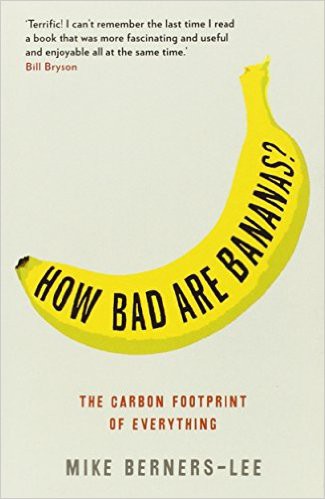
How Bad Are Bananas?

Set their facts straight and show them which things actually make a difference, and which are just a waste of time.

“On average, if you used public toilets six times per day, your hand drying would produce around 15 kg per year; equivalent to 1 kg of beef. “

Buy now on Amazon: UK | US

Compare prices: UK | US


The Outdoors Fan

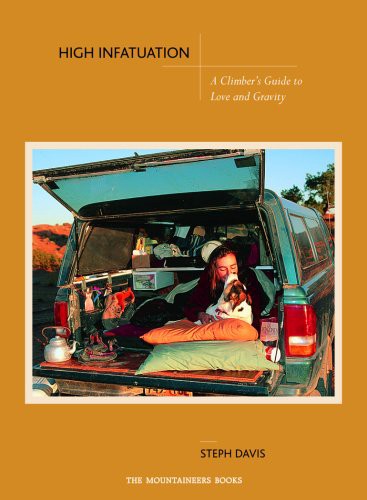
High Infatuation: A Climber’s Guide to Love and Gravity
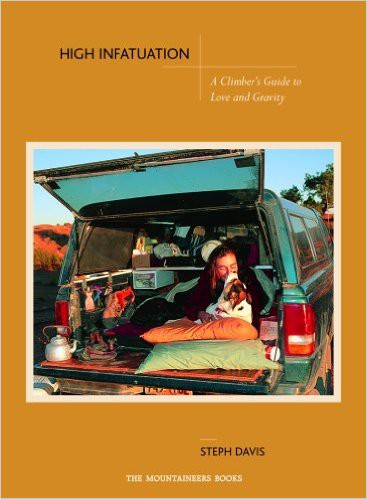
Let top climber Steph Davis inspire them as she shares some of her best stories and her outlook on life. On running into a polar bear she writes:

“I am deeply impressed and instantly stop speculating about how to survive a polar bear attack. One look has shown me that if a polar bear wants to eat me, it will, and there’s no point worrying about it.”

Buy now on Amazon: UK | US

Compare prices: UK | US


The Philosopher

On the Taboo Against Knowing Who You Are — Alan Watts
An exploration of the self in Eastern philosophy, from a Western point of view.

“There is a growing apprehension that existence is a rat-race in a trap: living organisms, including people, are merely tubes which put things in at one end and let them out at the other, which both keeps them doing it and in the long run wears them out. “

Buy now on Amazon: UK | US

Compare prices: UK | US


The Big Thinker

A Short History of Nearly Everything — Bill Bryson
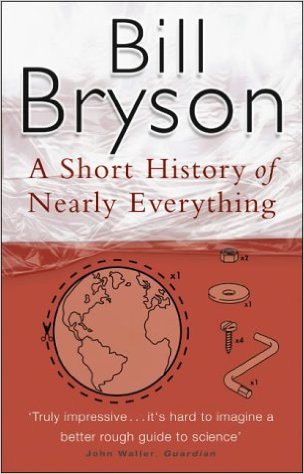
Bring them up to speed with this engaging history of science.

“In France, a chemist named Pilatre de Rozier tested the flammability of hydrogen by gulping a mouthful and blowing across an open flame, proving at a stroke that hydrogen is indeed explosively combustible and that eyebrows are not necessarily a permanent feature of one’s face.”

Buy now on Amazon: UK | US

Compare prices: UK | US


The Business(wo)man

The Little Prince

This book is so short they’ll have no excuse not to read it, and it might even get them to enjoy things and take themselves less seriously.

“Grown-ups never understand anything by themselves, and it is tiresome for children to be always and forever explaining things to them”

More great quotes on Buzzfeed.

Buy now on Amazon: UK | US

Compare prices: UK | US


The Atheist

The Selfish Gene — Richard Dawkins
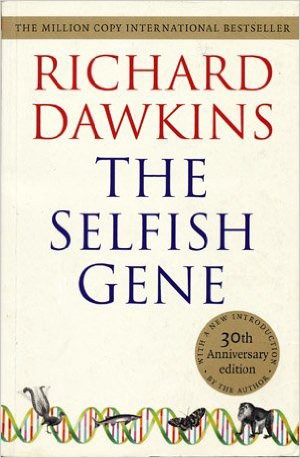
Show them the fundamental driving forces behind the evolutionary process that has shaped the natural world.

This book puts together the missing pieces in Darwin’s theory to make it so complete and beautiful that it almost seems obvious.

Buy now on Amazon: UK | US

Compare prices: UK | US


The Analytical Thinker

Godel, Escher, Bach — Douglas Hofstadter

Take them on a journey weaving together threads of maths, music, and art into a deep understanding of the nature of truth, and the meaning of Artificial Intelligence.

Buy now on Amazon: UK | US

Compare prices: UK | US


The Food Channel Addict

The Four Hour Chef — Tim Ferriss
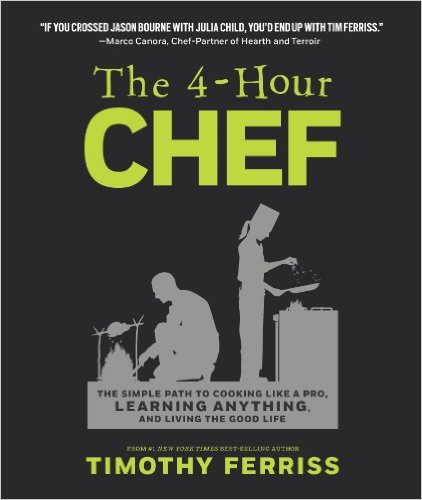
Get them cooking with this low-friction zero-to-hero guide that focuses on quick, easy to cook dishes using standard ingredients and tools.

Includes useful (optional) chapters on how to learn any new skill quickly.

Buy now on Amazon: UK | US

Compare prices: UK | US


The Career-Conflicted Idealist

So Good They Can’t Ignore You — Cal Newport

Show them the path to a job they will love. The author shares his own journey and other interesting case studies.

“Passion comes after you put in the hard work to become excellent at something valuable, not before. In other words, what you do for a living is much less important than how you do it. ”

Buy now on Amazon: UK | US

Compare prices: UK | US


The Tinkerer

Surely You’re Joking, Mr Feynman!
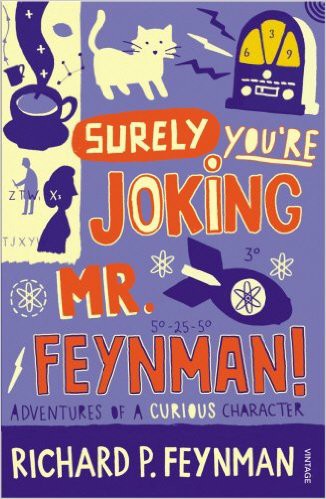
Give them a new role model in the form of Richard Feynman — Nobel prize-winning physicist, independent thinker, eternal prankster, and master of the bongos.

“You have no responsibility to live up to what other people think you ought to accomplish. I have no responsibility to be like they expect me to be. It’s their mistake, not my failing.”

Buy now on Amazon: UK | US

Price comparison: UK | US


Thanks for reading! I hope you’ve found a great gift here. Sharing/recommending much appreciated 🙂

For more reading tips, check out this article.
Read As Much As You Like For Almost Nothing

Yesterday a friend told me that she was going to have to cut back on reading because she was spending too much money on books.

My reaction was: “Really?! You can buy loads of books for less than the cost of the meal we just had. Reading doesn’t have to be expensive. It doesn’t even have to cost anything! ”

So if you’re reading this, here’s my take on how you can read as much as you like for almost nothing.

1. Read Classics For Free

Project Gutenberg is a project that digitises and freely distributes popular books which have gone out of copyright. If you’re looking for a classic book to read, start by checking the list of their top 100 books. Most of the books are available to read online, or to download in Kindle, pdf, and other formats.

2. Read A Chapter For Free

How many books have you bought which you haven’t even had time to get around to starting yet? And what about the ones you started but got bored of after the first chapter? Amazon gives free eBook samples of the first 10% of a book, which is often several chapters. Even if you’re sure you’ll like a book, why not just download the sample first and only pay for the rest once you’ve read past that?

3. Borrow Books For Free

This is obvious but worth mentioning because it’s so easy to forget. Most cities have public libraries (find your nearest library: UK/US). Usually you can sign up for free, and borrow several books at a time. If they don’t have the book you want in your local library you can often order it in from another one in the region if you’re willing to wait a little longer.

There are also non-public libraries. If you have Amazon Prime, you can borrow one book per month for free. It’s not worth signing up to Prime for this, but if you already have it then you might as well make use of the book lending service!

4. Buy Used Books For A Fraction Of The Price

I don’t get why anyone would feel the need to buy a perfectly crisp, new version of a book. Books are one of the few things which gain character with use, and I would almost always prefer to read a used book than a new one. The great thing is that these can often be picked up for a small fraction of the price!

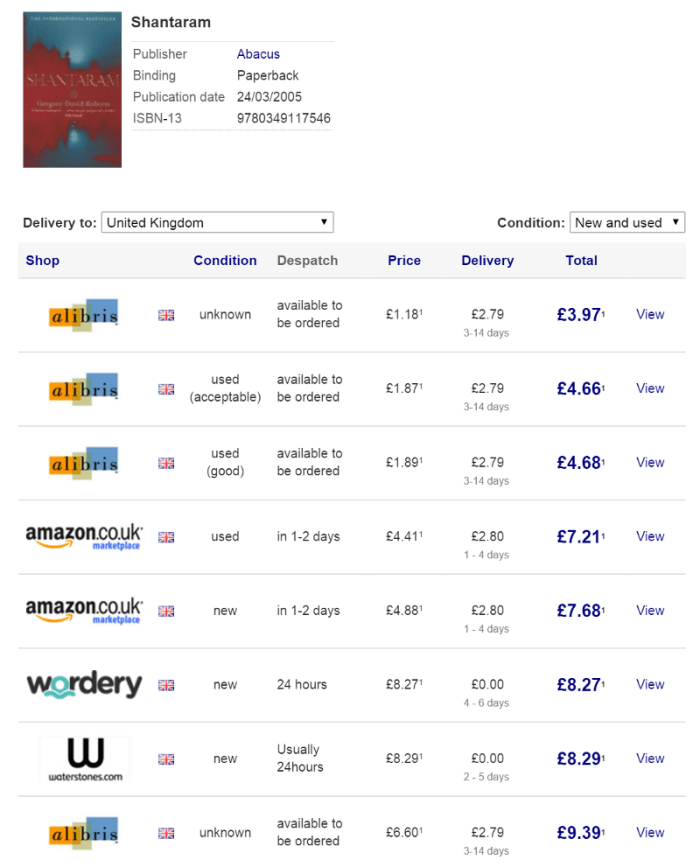
Second hand bookstores are great places to get lost and find books you would never otherwise come across. If you’re shopping online, this website will let you look up a book and show you the cheapest place to buy it, used or new (regional versions: UK/US/IN/DE/CH/NL).

Amazon isn’t always cheapest!

5. Exchange Books With Friends

A book is no good to me when it’s sitting on my shelf. If I’ve read a book and liked it, I try to think of a friend who will like it too and give it to them. Even if they don’t return the favour, I feel much happier knowing that they might be enjoying it too! Most good friends will return the favour though, so you’ll end up with more books including ones you might not have thought of buying yourself.

6. Invest In An eBook Reader

eBook readers are a great way to read, and though they may seem expensive at first I think they’re a great investment — I’ve had mine for several years and have spent countless hours reading on it. If you’re thinking of getting one I’d highly recommend the Kindle Paperwhite (new: UK/US or cheaper refurbished: UK/US) — here’s more on why.

Any more tips you think I should know about? I’d love to hear them, please get in touch! Thanks for recommending and sharing.


View at Medium.com

Three Things You Should Do Right Now To Protect Yourself Online

There are two types of companies: those who have been hacked, and those who don’t yet know they have been hacked.

– John Chambers, CEO of CISCO

Corporate hacks, data breaches, and leaked celebrity photos: data security has seen almost non-stop news coverage in recent years.

You can’t do anything about hackers or companies with inadequate security. Fortunately there are some things you can do to reduce the likelihood of hackers gaining access to your accounts, and minimise the impact if they do.

My Spotify account recently got hacked, which prompted me to improve security on my other online accounts. Here are three of the most important things I did, which you should also consider doing today.

Check Your Passwords

Adobe. Tesco. Sony. Vodafone. Yahoo. Domino’s. Forbes. Adult Friend Finder. Gawker. Ashley Madison. VTech. All of these sites have been hacked, and all have had their account data leaked. If you had an account with one of these sites, it’s likely that someone else now knows your password.

How do you find out if your data was leaked in any of these cases? HaveIBeenPwned.com allows you to enter your email address and search for it among over 220 million leaked accounts across all the above (and more) breaches. You can also sign up to receive notifications in case you are ever involved in a future leak.

If your details were leaked and you reused the password somewhere else, then you should consider that password public information and change it as soon as you can. To protect yourself against future hacks, one of the best things you can do is to use a unique, strong password for every account you have.

Set Up Two-Step Verification For Your Email Account

Your email account can be used to gain access to almost all of your other accounts. Two-step verification is an extra hurdle that makes it much harder for a hacker to gain unauthorised access to your account, by requesting an extra code when you log on from a new device. Here’s how to do this for Google/Microsoft/Apple accounts.

If that seems like too much hassle, this article is worth reading to see the full impact of losing access to your email account. If you think reading the article isn’t worth your time either, then just tweet me your email address and password and I’ll set up two-step verification for you.

Only joking, you should never do that. Please set up two-step verification.

Pay Attention To The Little Padlock Icon In Your Browser

When doing anything online, realise that people can listen in. If you’re using public wifi, it’s possible for people to intercept all the messages going between your device and the website you’re visiting. One way to protect yourself is by making sure that the messages being exchanged are encrypted, which means that anyone listening won’t be able to understand them.

That little icon, what is it good for? Security!

How do you do this? Look out for the padlock icon in your browser, which means that a site is using HTTPS. HTTPS messages are encrypted, so anything sent between you and that site will be protected from prying eyes. Do not send or receive any sensitive information on a webpage without the padlock icon, especially if you are using a public wireless network.

Thanks for reading. If you found this useful, please recommend and share. Leave a comment or response if you have any tips of your own!

View at Medium.com

How Autonomous Cars Will Change Society

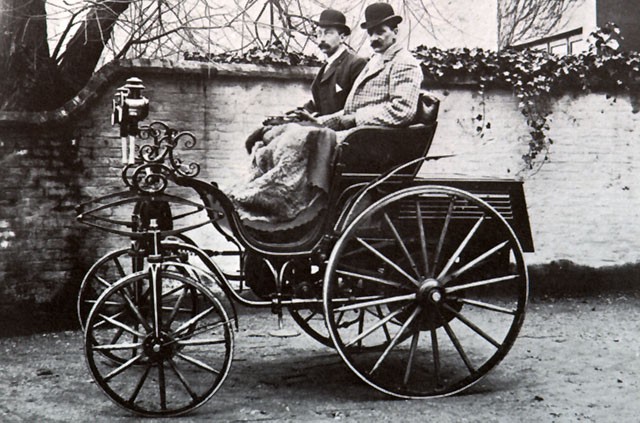
The horseless carriage didn’t just cause less horse shit. What will be the impact of a driverless, horseless carriage?

The dangers are obvious… Horseless carriages propelled by gasoline might attain speeds of 14 or even 20 miles per hour. The menace to our people of vehicles of this type hurtling through our streets and along our roads and poisoning the atmosphere would call for prompt legislative action…

– U. S. Congressional Record, 1875

In the late 19th century, as the horseless carriage was just around the corner, observers were skeptical of the possibility, practicality, and safety of such a design. Some of the questions being asked showed that people thought of it not as the thing it would become, the car, but as a novel version of the horse-driven carriage.

But where’s the horse?

The same thing is happening now, over 100 years later, with what’s being dubbed the driverless car. Most of the mainstream media attention so far has been focused on incremental or cosmetic ways in which these cars are different from what’s currently on the road, and fears related to these differences: what if a car driven by software kills someone? How will it make decisions about who to kill? What if these cars are hacked? Oh look, these cars might have more shiny windows!

These are important issues that will need to be addressed before widespread use is possible, but they hide the more interesting changes that these cars will bring.

A horseless carriage doesn’t just mean less horse shit.

It means highways, long distance commutes, spread out families, suburban sprawl, trucks, far away holidays, and more. The social and environmental changes brought about by the introduction of the car went far beyond the initial fears and speculations.

A driverless car doesn’t just mean less time spent at the wheel.

As I will aim to describe here, it means less parking hassle, a smoother ride, new business models for taxis, fewer road deaths, improved accountability, fewer car owners, specialised car designs, and many more things which we haven’t realised yet.

One person whose writing seems more forward-looking than most of the mainstream media’s short-sighted pieces is software architect and entrepreneur Brad Templeton. As a previous member of Google’s self-driving car team, he has done a lot of research in this space. On his robocars page he shares many of his predictions on what driverless cars will mean for society. Here is an introduction to some of the more interesting ones.

Less parking

Cities currently need to allocate some of their land to parking spaces. In addition, at certain times a significant proportion of urban traffic is made up of cars looking for parking spaces. Self-driving cars ameliorate both of these by

  • Being able to park further away — you will be able to step out of your car wherever you need to get off, and tell it to go park itself. Then, when you need it again, you’ll be able to call it and get it to pick you up where you are.
  • Using non-conventional parking spaces — why can’t we park in front of someone’s driveway? Because that would block them in. But what if a self-driving car was able to realise when the driveway needed to be used, so that it could park there and move out of the way if the owner of the driveway returns or needs to leave? That would create a lot of new parking spaces.

A smoother ride

Current cars have good suspension, but not the best possible. Self-driven cars won’t need to be able to ‘feel’ the road in the way that humans like to, and so suspension can be optimised further. These cars will also have more precise control over acceleration, unlimited patience, and will likely be able to optimise for comfort over speed in scenarios where this is relevant.

Driverless, horseless Uber

The taxi industry is already being disrupted by companies like Uber and Lyft, and it is moving towards a model which almost looks like it was designed for self-driving cars. The next step here will be app-based ‘summoning’ of self-driving cars, wherever you might be in a city.

Uber could buy a fleet of self-driving cars for themselves, but it would be more in line with its current model to allow individuals or other companies to put their cars to ‘work’ for the Uber app when they’re not using them themselves. People might even buy cars especially to have them work for Uber, in the same way that some people now buy apartments to rent out on Airbnb.

Fewer road deaths

Car crashes kill over 1 million people per year globally. Self-driving cars don’t drink, text, fall asleep, or turn around while driving. They have faster response times, and are more aware of their own limitations. Because of the incentives created by increased accountability (as detailed below) and the highly negative impact of the fear following any accidents, there is enormous pressure on manufacturers to make sure that their accident rates are far lower than current human accident rates —Templeton’s estimate is that these cars will need to demonstrate an accident rate 10–50 times better than human drivers before they will even be allowed on the road unsupervised.

Improved accountability

A common concern about self-driving cars is about assigning blame. If a car crashes and kills someone, who will be at fault? Self-driving cars will actually make this process easier, for the following reasons:

  • Fewer crashes. As covered above, there will be fewer crashes. Apart from the obvious direct benefits, this also means fewer cases to investigate.
  • More data. These cars are covered in sensors, so it will be much easier to tell who was at fault in an accident. Decisions will be based on recorded facts rather than eye witness accounts. If a company’s software is found to be at fault, the company can improve it and send out software updates to all their cars without having to physically service them (Tesla already does this).
  • More at stake. Right now most drivers assume that they will never be in an accident, and many often take risks which turn out OK 99% of the time. If a company has produced millions of self-driving cars, it won’t be able to afford having them take risks like that because it knows that some of them will result in accidents. Because of this self-driving cars are likely to drive in a much more cautious way than human drivers.

Fewer car owners

As autonomous cars become ubiquitous, car sharing will become more viable. Current schemes such as zipcar are a good start but having to walk around to find a zipcar is an inconvenience. When app-based car summoning (Uber or otherwise) becomes available it will likely be cheaper, more convenient, and safer for a lot of people based in cities or big towns to use a such a service rather than own their own car.

Specialised car designs

What happens when you remove the need for a steering wheel, dashboard, windscreen, pedals, and windows? Just like early cars gradually moved away from the carriage design, these new cars will probably evolve slowly into something that looks very different from current car designs. These are some designs we might see:

  • Small and light one- or two-person cars. People tend to buy versatile large cars for occasions, however rare, when they need to carry four, five, or seven people at one time— even though many journeys today are made with one person in the car. When car sharing becomes more prevalent, it’s likely that we will see smaller car models as it will be easier to match the demand for these journeys to the right type of car. These will be much lighter — hence cheaper to produce, and less fuel-hungry. They’ll also be able to park more flexibly, and might be able to share lanes with other smaller cars to make better use of road space.
  • Sleeper cars. For long journeys, there might be cars which are effectively beds on wheels. These would be optimised for smoothness over speed (few people would mind a slightly longer journey if it means they get better sleep) and would allow people to undertake longer journeys by car than they normally would.
  • Entertainment cars. For medium length journeys, some cars could resemble a modern living room. With a smooth ride, a large screen and a games console/entertainment system/Netflix, your commute could feel just like relaxing at home.
  • Courier cars. Small, lightweight, autonomous cars designed purely to carry small cargo. These would be more like current motorbikes than cars in size, and might be a more viable option than delivery drones for anything but extremely light packages.

Driving will become recreational

These new cars won’t mean that people-driven cars will disappear (though they might be banned from driving on public roads, as Tesla’s Elon Musk has suggested). People still ride horses for fun. Driving for leisure will probably remain popular, but these autonomous cars will take over where driving is just a means to an end.

If you found the content of this post interesting, please recommend or share so others will read it too. I’d highly recommend checking out Brad Templeton’s Robocars site and blog if you’d like to take a more in-depth look at this subject.

How I Lost Control of My Spotify Account

And How To Prevent Unauthorised Access to Yours

Monday morning. Bag down, headphones on, ready to get to work. But first some music.

Please enter your username and password.

Hmmm, I don’t remember the last time Spotify asked me that.

Incorrect password.

Sigh. I guess I’ll have to reset.

Password reset email sent.

Why am I not getting a password reset email?

Maybe I signed up with my Facebook account?

Welcome to Spotify, would you like to take a tour?

That’s weird, it thinks I’m a new user…


What Happened?

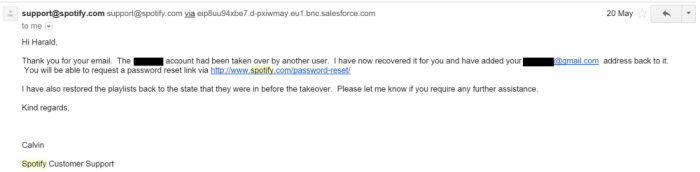
It took me surprisingly long to figure out why I couldn’t access my Spotify account. Someone had managed to log themselves into my account, and had replaced the email address on the account with their own. Luckily it was a premium account, so even though it took several days and a few emails back and forth, the Spotify support team reset my account and restored the playlists I had lost.

Luckily Spotify’s support team were fairly helpful in restoring access to my account

But why would anyone want to hack into my Spotify Premium account?

Surely no one hates ads so much that they would hack into someone else’s account to get rid of them rather than paying the monthly fee?

Months after this happened and I had forgotten all about it, I read this article about Spotify’s royalties model which revealed a motive:

All a fraudster has to do is set up a fake artist account with fake music, and then they can use bots to generate clicks for their pretend artist. If each stream is worth $0.007 a click, the fraudster only needs 1,429 streams to make their $10 subscription fee back, at which point additional clicks are pure profit. But… it’s possible to purchase stolen premium accounts on the black market, making the scheme profitable almost immediately.

So someone got control of my Spotify account, and was using it to play their own ‘music’ on repeat to extract royalties from the system. It turns out that it’s possible to make up to $600 monthly per account this way. But how did they get into my account in the first place?


My Mistake

This is where I have to admit that even though I’ve been interested in computer security for a long time, I’ve been lazy for a much longer time, and sometimes I reuse passwords. I know, I know… When I first set up my Spotify account I used a password I had used before. I didn’t bother changing it when I upgraded to premium.

It turns out that one of the things I had used that same password for was to sign up for an Adobe Photoshop trial. Oh and, in the meantime, Adobe got hacked and the details of 153 million accounts leaked. Oops.

So I’m guessing that some ethically compromised, entrepreneurial faux-artist out there realised that people would reuse their Adobe passwords for other things and checked all the hacked details to see if they could log into Spotify with them. And my account was one of those.


Lessons Learned?

Stop reusing passwords. Seriously! Stop it. Right now.

After this happened I read up a bit on best practices for personal online security, and wrote up a short summary of the easiest things with the greatest impact. You can read it here.

Thanks for reading, I hope you’ve found this useful. Please recommend and share so others can read this too. Leave a comment or response if you have any tips to share! Now, I have some passwords to change…

Eating to Live Forever: A Sustainable Healthy Eating Habit

Visionary technologist, writer, and current director of engineering at Google Ray Kurzweil believes that he’ll live forever. Within mere decades, he says, nanotechnology will allow us to halt and even reverse aging. His current mission is to stay alive until that happens. Much of the advice below is sourced from his book Fantastic Voyage: Live Long Enough To Live Forever.

Eating healthily is hard. It requires willpower and it’s hard to care about long-term benefits when there’s cake in front of you. But there’s an even harder problem — what does ‘healthy’ eating even mean?

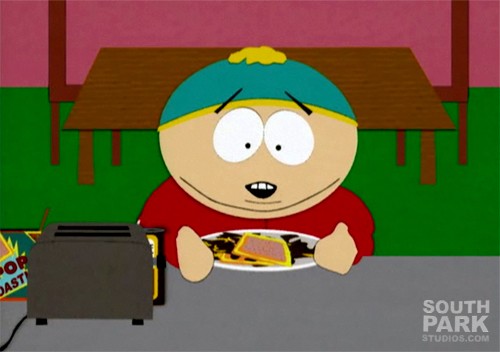
Mmm… pop tart butter ball surprise.

I’ve never been visibly unhealthy but a lot of my meals were — picture Eric Cartman and Chief Wiggum in charge of the food for a five-year-old’s birthday picnic, but with more chocolate.

I never thought this was an issue as long as I stayed fit. Since then family illnesses, other people’s opinions, and some basic research convinced me that I should probably reconsider.

The beginning

A few years ago, after reading In Defense Of Food, I decided to give up soft drinks almost entirely. The evidence against soft drinks and refined sugar more generally is uncontroversial, and many think that in a few decades the soft drink industry will be viewed in the same way we view the tobacco industry today. But what about the other aspects of diet?

Is it enough to look at calorie count, or should you care about the balance of macro-nutrients (carbs, fat, protein, etc)? Does it matter more what you eat, where your food is sourced, or how it is prepared? Should you eat low-fat? Low-carb? Paleo? Atkins? Slow carb? Soylent?

As nutritionism is notoriously faddish, it’s important to look beyond what people around you are doing right now (juice cleanses, anyone?) and consider what matches up with the evidence we have and the understanding of how food is processed in our body.

Kurzweil’s approach

It’s hard not to believe Kurzweil — he’s more than just technically literate, has sufficient resources at his disposal, and has an enormous amount of self-interest in following the most effective diet possible. While his book contains a wealth of fascinating information on biological processes and chemical makeup of different types of food, Kurzweil’s main advice boils down to the following points:

  • Cut out sugar and simple carbs almost entirely
  • Eat mainly whole foods
  • Reduce fat intake, especially saturated fats
  • Eat a lot of vegetables of various colours
  • Drink lots of water and green tea, avoid excess alcohol and coffee
  • Take a variety of supplements

Does this make sense? Probably…mostly. Sugar and simple carbs cause glucose spikes, which cause insulin spikes, which might reduce insulin sensitivity, leading to diabetes and potentially other long term downsides. Fats, especially saturated fats, contribute to increased risks of heart disease. Many vegetables are low in both of the above while containing high levels of important vitamins and fibre. Water is important for almost every process in our bodies.

As for supplements… Kurzweil has recently cut down his daily dose of supplements to ‘only’ 150 pills. He believes that aggressive supplementation is a necessary part of a modern diet, as it allows us to make up for dietary deficits and ‘hack’ our bodies by exploiting our understanding of the chemical processes underlying disease and ageing. Though he may have a point, I think Nassim Nicholas Taleb has an interesting stance on this: our knowledge of supplements and their impact is still very limited, and while they may have some positive effects it’s not possible for us to know what negative effects supplements will have without further long-term research.

Further, the fact that Kurzweil has his own dietary supplements business makes this part of the advice less interesting and potentially more biased (though I don’t believe that this is necessarily true).

My approach? Write the above points down on a business-card sized piece of paper that I keep in my wallet and read before every meal, checking whether the meal complies. I’m hoping that this will guide me in the right direction.

Dell XPS 13: Initial Impressions and Setup

I got a Dell XPS 13 last week. It’s one of the best ultraportable laptops out there right now, it got consistently great reviews, and I’m pleased with it so far (though not so pleased with the sales and service from Dell). When I received it I made a few tweaks to it to make it nicer to use. These are some notes for anyone who wants to do the same, with screenshots. I hope it saves someone a bit of time Googling ☺

First Impressions

  • The bezel is small. Seriously small.
  • The speakers are really good.
  • It boots up extremely quickly.
  • Battery life is decent.

Setup

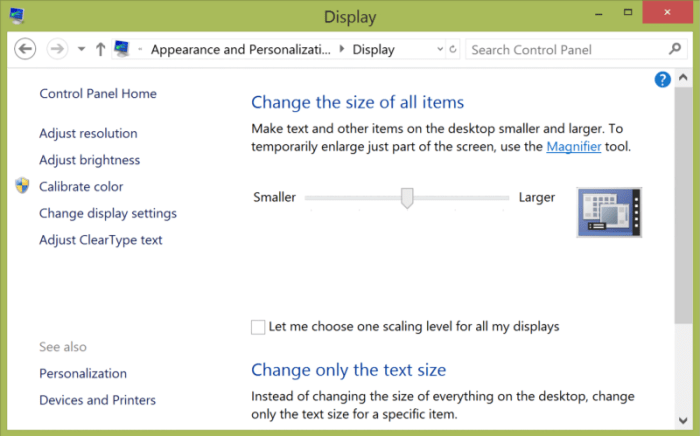
  • Everything looks huge, due to the display scaling which is set at 250% by default. Reducing this to 150% allows you to make more out of the great screen without having to squint quite as much as at 100%.
Reducing scaling to make the most of the screen
  • Some bloatware is installed. I immediately uninstalled the Amazon app and McAfee LiveSave. The latter especially slows down startup and can exacerbate this bug in Google Chrome.
  • The trackpad isn’t very sensitive — luckily this is easy to change.
Increasing trackpad sensitivity
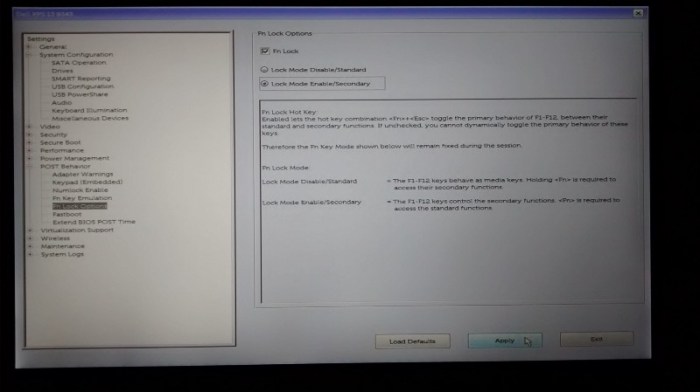
  • The function keys are inverted —instead of holding Alt+F4, for example, you need to hold Alt+Fn+F4. Some people prefer this as it means you don’t have to hold down Fn to change brightness/volume, but I don’t. To change this, go into the BIOS (hold F2 on startup) and activate the ‘Lock Mode Enable/Secondary’ radio button.
Inverting Fn keys to get them back to ‘normal’.
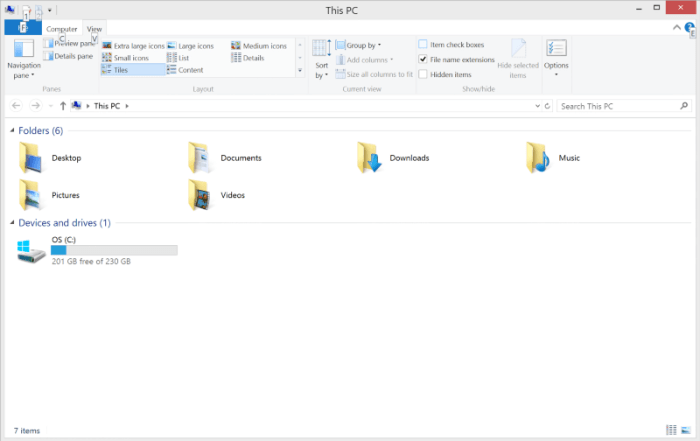
  • Clicking items in Windows Explorer checks them. This seems to be the default in Windows 8 for some reason. To disable, just uncheck the option ‘item check boxes’.
Disabling item check boxes
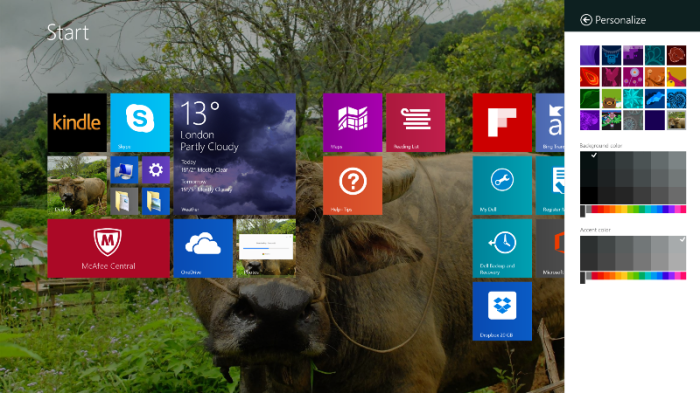
  • Setting the background of your start screen to the same as your desktop background makes the whole start screen experience much less jarring.
Setting the Start screen background to the same image as the desktop background
  • If you’re new to Windows 8, watch this video. It’s four minutes long but will save you hours.

For those using Chrome, these are a few useful extensions that I find especially handy on a laptop:

If you have trouble following any of the above feel free to get in touch.

Effective Language Learning – Pardon My French

I’ve had an interest in French for a while. I got a basic grasp of the language during primary school, and never learnt enough in secondary school to comfortably have a conversation with someone. I started becoming interested in improving again about two years ago, and since then I’ve tried several different approaches. I’d like to share what has worked for me and what hasn’t.

My initial approach involved all of the usual things well-intentioned newbies do: I signed up to some evening classes, printed off verb tables to review “when I had time” and resolved to “sometimes speak French” with friends who were already fluent in the language.

While these all worked to some extent (I went to two out of ten evening classes, memorised a few verb conjugations and exchanged a handful of sentences in French with my friends before reverting to English), none were really a success. Frustration set in, and soon I was back to square one.


But then I stumbled upon a post on Tim Ferris’ blog, entitled ’12 Rules for Learning Foreign Languages in Record Time — The Only Post You’ll Ever Need’. Though initially sceptical, I found a lot of the advice useful and set about trying it. Here’s what I’ve found the most useful and effective, as well as some other things I’ve discovered since.


Listen to Stromae’s Formidable enough times and you’ll never forget how to conjugate être in the imperfect tense.


Immerse yourself

Almost every language teacher will recommend immersion as the best way to learn. That doesn’t necessarily mean travelling to a place where they speak the language though — there are plenty of other ways to achieve it.

The first step is to make a habit of engaging with things in the language you’re trying to learn, and the only sustainable way to do that is to enjoy it. For me that meant finding some good French webcomics and books, which I now read along with others on an almost daily basis.

It doesn’t matter exactly what you do, but try to consume media in your target language wherever possible, instead of watching films/TV in your own language. There are lots of great French YouTube channels (Nus et cullotés, Norman, news, …), TV shows (Braquo), films (qu’est-ce qu’on a fait au bon dieu, Amélie, …) and books (Le Petit Prince, Le Petit Nicolas) which will help you achieve a feeling of immersion at home. And since this is about having fun, you won’t even realise how much you’re learning — listen to Stromae’s Formidable enough times and you’ll never forget how to conjugate être in the imperfect tense.

Practise speaking

It’s important to practise speaking as early as possible — before you feel ready — because you’ll never actually feel ready. Speaking will force you to make mistakes and discover gaps in your knowledge much more quickly than anything else will. While it can certainly feel difficult and draining at first, there is no substitute for it. After all, what is the goal of learning a new language if it isn’t to communicate with other people?

This can be made fun by combining it with something social. There are great free language exchange groups on Meetup.com and Couchsurfing, where you can meet people who speak the language you’re learning and want to learn the language you speak. The great thing here is that there is an incentive for both sides to speak bits of both languages, and I’ve found it to be more constructive than learning with someone who is already fluent in both languages.

Streamline rote learning

The least fun part of learning a language is memorising grammar, but it has to be done. Everyone hates staring at pages in a book or on a screen for ages only to forget everything soon after, but luckily there’s a better way.

Enter Spaced Repetition Systems.

I wish I’d known about these when I was a student. Spaced Repetition Systems (I use Anki) are like flashcards, but smarter. They’ll track the cards you struggle with, and show you those more frequently. Cards which you consistently get right will be pushed to the bottom of the deck. The really smart thing here is that these tools try to show you each card again just before you’re about to forget it, allowing you to spend as little time as possible memorising things while remembering more! You can make your own flash cards, or use pre-made ones. I use this deck for verbs, but there are also decks for vocab and phrases here.

Commit to doing the boring things

Even though you’ll now be able to do rote learning more effectively you still have to… well… do it. It’s no use having a “learn regular French verb endings” item on your to-do list if you (like me) never get around to doing it. Commit to spending a small amount of time studying these at regular intervals. It doesn’t matter whether it’s 5 minutes every day or 20 minutes once a week, but put it in your diary and make sure it happens. The only way I’ve found to get myself to do this is to use a tool like Beeminder, which is built to help you commit to goals and overcome short-term laziness in favour of long-term benefits.

Experiment — and fail.

There are many ways to approach language learning. The right method for you depends on how you like to learn and what stage you’re at. If a method doesn’t work for you, try not to be discouraged and give up on learning altogether, but switch to a different method. Sometimes the marginal benefit from a certain method might be so low that you’re better off doing something else for a while and coming back to it later (e.g. you’ve memorised present tense verb endings and some basic vocab — get out there and practise speaking before you memorise anything else!).

On the other hand, there’s no shortage of advice or apps for language learning and it’s easy to get stuck in a cycle of changing your approach too frequently. I’d highly recommend reading the post on Tim Ferris’ blog which I mentioned at the beginning of this article as a start. The key apps I keep coming back to are Beeminder and Anki as mentioned above, and Duolingo. Here’s a detailed review of Duolingo as a tool for learning French from scratch, by someone who went through all the lessons on it from start to finish.

What have you found most helpful? I’d love to hear about it. More importantly, bon courage!

Book Review: High Infatuation by Steph Davis

As I’ve been getting into climbing, I’ve tried to find interesting climbers to learn and draw inspiration from. Steph Davis is one climber whose blog I’ve been reading regularly and whose attitude I admire. I couldn’t get enough of her blog, so I bought her first book: High Infatuation. This is a review of that book.

Often when I enjoy a book I’m reading I’ll try to read it more slowly so I have more time to savour the content. With this book the opposite happened — I couldn’t wait to get to the end so I could read it again.

Steph Davis has an impressive list of credentials: she’s one of the world’s leading climbers and the first woman to complete several milestones of the climbing world: free climbing El Capitan in one day, free soloing The Diamond on Long’s Peak and summiting Torre Egger in Patagonia.

History

The book starts with the story of how Steph first started climbing during her university degree, and went on to spend the seven years after graduating climbing and living out of her car with her dog Fletcher.

Steph, her Oldsmobile home, and her dog Fletcher.

From there the book winds in and out of endless climbing adventures, as chronicled in her journals from the time. As well as endeavours in Moab and Yosemite the book tells of her weeks spent in snow caves in Patagonia waiting in vain for better climbing weather, doing a first ascent of Tahir tower in the military Kondus zone in Kashmir, a spur of the moment trip to Kyrgyzstan, rappelling and falling from Fremont Canyon bridge in Wyoming, and several weeks spent in the Arctic.

Impulse

While these stories are fascinating in themselves, I found Steph’s reactions to the events even more interesting. She provides detailed insight into how she came to be in these situations, and what drives her to keep going. She has a very open-minded approach to life largely driven by kindness, presence, minimalism, and self-improvement.

My pursuit of climbing was initiated by impulse. In reality it was never a choice, but rather a surrender to the inevitable. Even now, supposedly older and wiser, I make my most fundamental life decisions impetuously, based on what feels right inside, and I never look back. It’s the only thing I can do.

Philosophy

While the focus of the book is obviously on climbing, there are times when it touches on philosophy and almost ventures into self-help. Describing her discovery of Sufism and approach to mindfulness, Steph also gives glimpses of her thought process throughout the stories in her book. At one point she spends two days travelling across the Arctic sea ice in a skidoo to get to a climbing site, and can’t stop worrying about encountering polar bears. Until she encounters one.

I am deeply impressed and instantly stop speculating about how to survive a polar bear attack. One look has shown me that if a polar bear wants to eat me, it will, and there’s no point worrying about it.

Humility

Given the magnitude of her achievements, Steph’s humility is refreshing. There isn’t a hint of boasting to be found in the book. She embodies the growth mindset, emphasising determination and persistence over genetics or natural skill. This aspect in particular made for great motivation, as it leaves no excuse not to get out there and give everything.

As a climber, I have always felt like the pesky little sister chasing after the older, faster, bigger kids… For me, it has been hard to let go of attachments, hard to let go of self-doubt… But slowly I’m starting to understand that it’s not just a fluke when I succeed. And I’m starting to realize that in climbing, as in life, determination and a commitment to learning are qualities as invaluable as unusually strong body parts. Persistence and fanatical hard work are powerful assets not to be underestimated.

Motivation

For me, High Infatuation did for climbing what Born To Run did for running — it made me want to get my shoes on (or not) and get out there.

I would highly recommend this book to anyone with even the vaguest interest in climbing or life. I’m happy to lend out my copy — get in touch if you’d like to borrow it.

Steph Davis. Source: www.highinfatuation.com

If you’re interested in climbing, check out some of my other posts:

View at Medium.com
View at Medium.com

Shortcuts to Intermediate Climbing

I’ve been climbing regularly for about a year now. Mostly bouldering (no ropes, just a crash pad), at a great indoor wall in Bermondsey called The Arch. While I’ve still got a long way to go to becoming a good climber, there are a few key things I’ve learnt that let me progress from the beginner stage. As these things seem to be common among climbers but not obvious to beginners, I’ve shared them below to save anyone starting out the trouble of figuring them out for themselves.

Don’t do pull-ups

Overhangs. These climbs, where the wall has a slope of more than 90° (more than vertical), tend to be the hardest for beginners. The key is to expend as little energy as possible by keeping your arms straight and pushing from your legs to move up. Whenever you’re static for more than a second, make sure your arms are straight. Think about doing pull-ups — is it easiest to rest halfway through one, or at the bottom with straight arms?

Twist your body

Most people have their body square to the wall when they start climbing. This feels natural, just like climbing a ladder, but has several disadvantages. Having your body (hips and/or shoulders) twisted will keep you closer to the wall while allowing you to reach further — watch an experienced climber at work on an overhang problem and notice how often they twist their body from left to right depending on which way they have to reach for the next hold.

This was me at The Arch almost a year ago. Arms bent, body square to the wall, standing on the balls of my feet. If only I’d had this article…

Thumbs up

Pushing on a hold with your thumb while pulling with your fingers makes for a much stronger, more stable grip, and is less tiring. Good grip technique will allow you to progress more quickly without having to spend time doing boring finger strength exercises.

Pay attention to your feet

It’s easy to focus on the arms and hands, but if you’re climbing right then your legs will be doing most of the work. Think about where you place your feet, and place them carefully and deliberately. It’s almost always best to use the very tip of your toes rather than the balls of your feet. If there’s only one foothold available, the second leg doesn’t have to dangle. Place it somewhere deliberate on the wall or even in the air for counter balance.

Standard Moves

Flag. Drop knee. Smear. Rock over. Toe hook. Heel hook.

While it took me a while to realise this as a beginner, good climbers largely rely on a combination of standard moves, and knowing what these are gets you a long way. The trick, especially in bouldering, is figuring out how to combine the moves around the available holds. This is why boulder routes are called ‘problems’ — they’re as much a puzzle as an exercise.

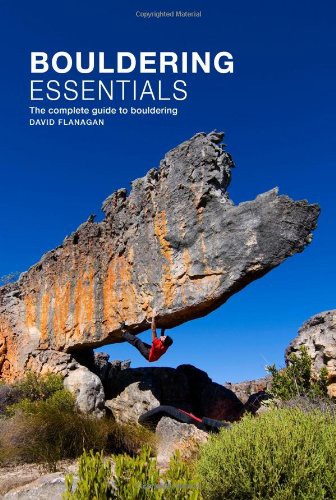
Try this book if you like taking a methodical approach to learning. It’s £15 for a used version, but if you ask nicely I’ll lend you mine.

Fail more

As with anything, if you’re not failing regularly then you’re not pushing yourself enough. Once you get comfortable climbing at a certain level, start trying harder problems. If you struggle with specific types of problems (like I do with overhangs), then spend more time trying those.

Get excited

As Einstein said, the best way to learn is by “doing something with such enjoyment that you don’t notice that the time passes”. I find climbing enjoyable, but as with anything there are times when other things take over, you become busier, and find it hard to keep making time for it.

To counter this, remember why you want to climb. Watch amazing videos. Read inspiring books. Try different types of climbing. Challenge yourself. Find a group of people to go with. I was lucky enough to have some people in my group of friends happy to go climbing with me, and am making more friends along the way.


I feel like I’ve learnt a lot this past year, mostly about how much there is to learn. This year I’d like to learn more about rope techniques, and climbing outdoors. While I’ll still be bouldering too, I’ll be making time to go on some trips to the Peak District and other UK climbing sites. Get in touch if you’d like to join me.